Raju Stickers Team · 2026-08-12 · 7 min read
How to Apply a Car Wrap: A Practical Guide
A clear, step-by-step approach to applying premium vinyl wrap on flat panels and curved surfaces.
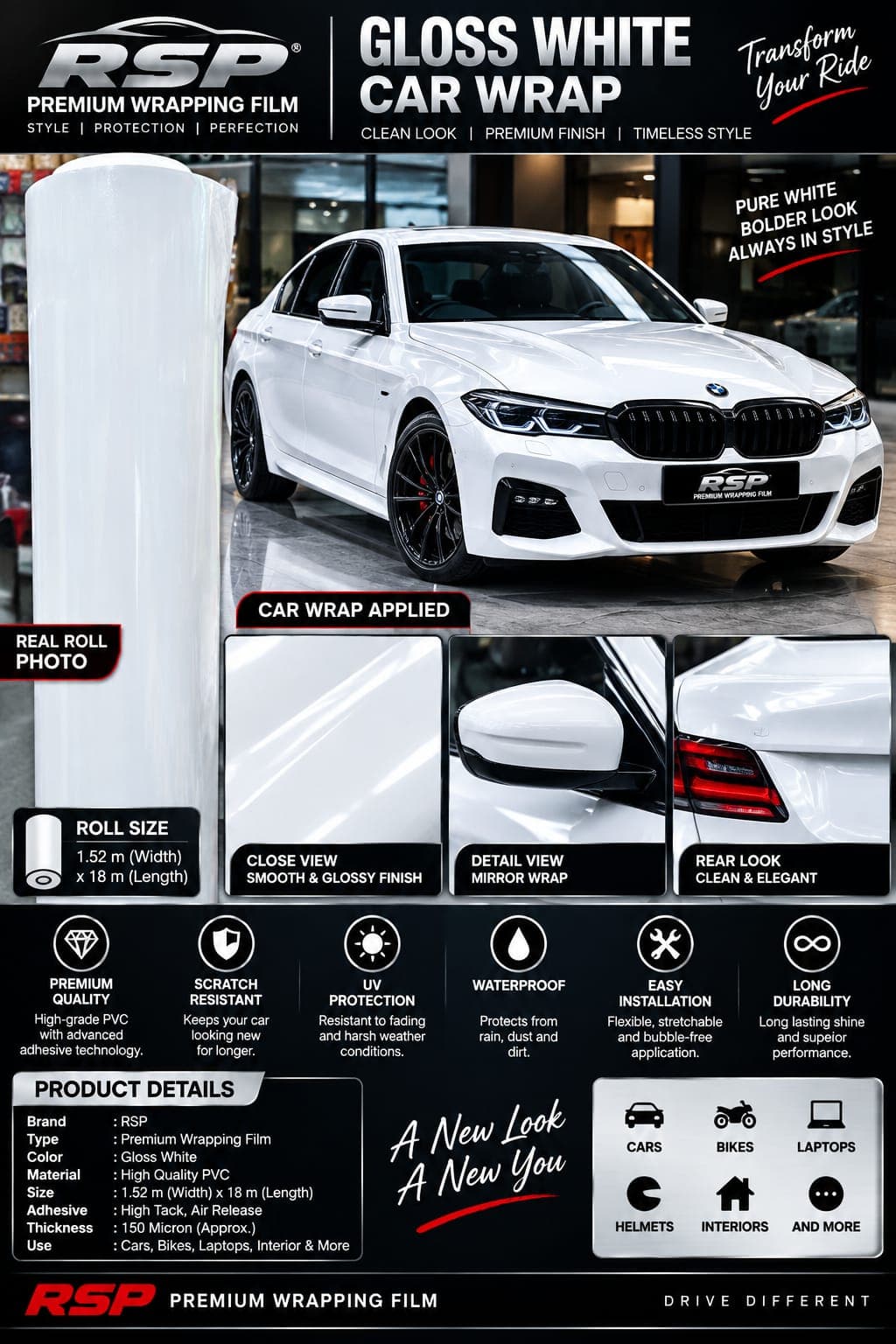
Why preparation matters more than speed
Most wrap failures start before the film touches the car. Dust, wax, silicone, and old polish residue stop adhesive from bonding. Take longer on prep than on the first panel.
Tools you actually need
- Isopropyl alcohol (70–90%) and lint-free cloths
- Sharp wrap blades and a quality squeegee
- Soft measuring tape and masking tape for layout
- Heat gun with controllable temperature
- Gloves to keep oils off the adhesive
Step-by-step application
1. Wash and decontaminate Wash the vehicle, clay if needed, then wipe panels with isopropyl alcohol. Focus on edges, door jambs, and mirror housings.
2. Plan the panel Unroll film on a clean table. Cut oversized pieces so you have margin for stretch and trim. Align texture direction on carbon and holographic films.
3. Anchor, then work outward Peel backing gradually. Anchor the center of the panel, then squeegee outward with overlapping strokes. Push air toward the edges — do not trap it in the middle.
4. Handle curves carefully On mirrors and bumpers, use tension and light heat. Relocate film while adhesive is still workable instead of forcing creases.
5. Trim and seal Trim with a fresh blade at a shallow angle. Tuck edges where possible. Revisit edges after 15–20 minutes.
Common mistakes to avoid
- Stretching chrome mirror film too aggressively
- Applying over unclean rubber seals
- Using dirty squeegees that scratch finishes
- Washing the car the same day
When to hire a professional
Full vehicle chrome wraps, deep recessed bumpers, and colour-change jobs on daily drivers are worth professional install. DIY shines on roofs, mirrors, spoiler accents, and bike panels.
Related Products
Frequently Asked Questions
Mild controlled heat helps on curves and edges. Flat panels often need little to no heat. Never overheat chrome mirror films.
Fresh ceramic coatings can reduce adhesion. Wrap prefers clean, paint-ready surfaces without heavy sealants.